California Net Billing Tariff (NBT): Complete Guide for Solar Contractors 2026
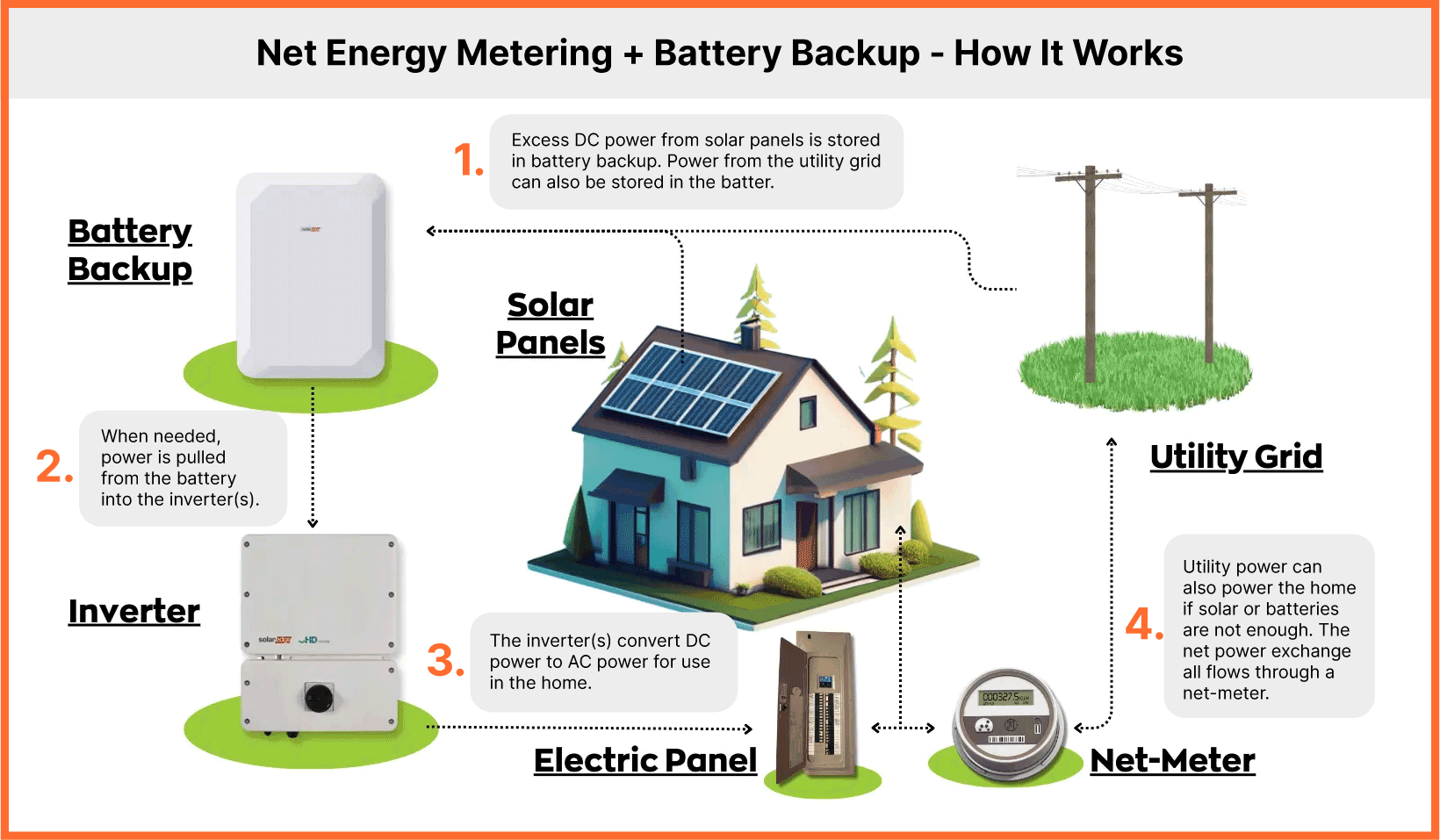
California’s Net Billing Tariff (NBT) — commonly called NEM 3.0 — is now the standard compensation structure for all new solar customers in California. Understanding how NBT works is essential for every solar contractor designing and selling systems in the state in 2026.
What Is the Net Billing Tariff (NBT)?
The Net Billing Tariff is California’s replacement for NEM 2.0, administered by the three investor-owned utilities: PG&E, SCE, and SDG&E. Under NBT, solar customers are compensated for excess energy exported to the grid based on the Avoided Cost Calculator (ACC) rate — not the full retail rate.
The ACC rate represents what the utility would have paid to generate that electricity from another source. These rates are:
- Significantly lower than retail electricity rates
- Time-varying — higher in the evening, lower midday
- Season-dependent — higher in summer months
- Updated annually by the California Public Utilities Commission (CPUC)
NBT Export Rates vs NEM 2.0
Under NEM 2.0, customers received approximately $0.30–$0.35/kWh for exported energy (retail rate). Under NBT, typical ACC export rates range from $0.05–$0.15/kWh during midday hours when most solar production occurs.
This dramatic difference means that exporting solar energy to the grid is far less valuable under NBT — making battery storage the key to a financially attractive solar system.
Why Battery Storage Is Now Essential in California
Under NBT, the financial math changes completely:
- Without battery: Daytime solar production that exceeds household consumption gets exported at low ACC rates (~$0.05–0.08/kWh)
- With battery: Excess daytime production is stored and used in the evening when grid electricity costs $0.35–0.55/kWh — a 5–10x improvement in value
For most California homeowners, a solar+battery system under NBT offers better economics than solar-only, despite the higher upfront cost.
Designing Solar Systems Under NBT
As a solar contractor, your system design approach needs to shift:
- Right-size the solar array — Oversizing leads to wasted low-value exports. Design for self-consumption first
- Always propose battery storage — Tesla Powerwall, Enphase IQ Battery, or Franklin Electric are the most common options
- Use time-of-use (TOU) optimization — Program batteries to discharge during peak evening hours
- Update your financial models — NEM 2.0 payback calculations don’t apply under NBT
Permit Requirements for NBT Solar+Battery Systems
Solar+battery systems in California require permit plan sets that include:
- Updated single-line electrical diagram showing battery integration
- Battery location on site plan with required clearances
- NEC Article 706 ESS compliance documentation
- Rapid Shutdown compliance (NEC 2020)
- CALFIRE setback compliance
- PE stamp (required for most California jurisdictions)
How EnersolConnect Supports California NBT Projects
Our engineering team designs permit-ready plan sets for California solar and solar+battery projects. We handle all NBT-era requirements including NEC 706 battery compliance, CALFIRE setbacks, and SolarApp+ submissions.
PE-stamped plan sets delivered in 2–5 business days. From $600 for residential systems.
Get a free quote for your California solar+battery project →