How to Calculate Solar String Configuration: A Contractor’s Guide
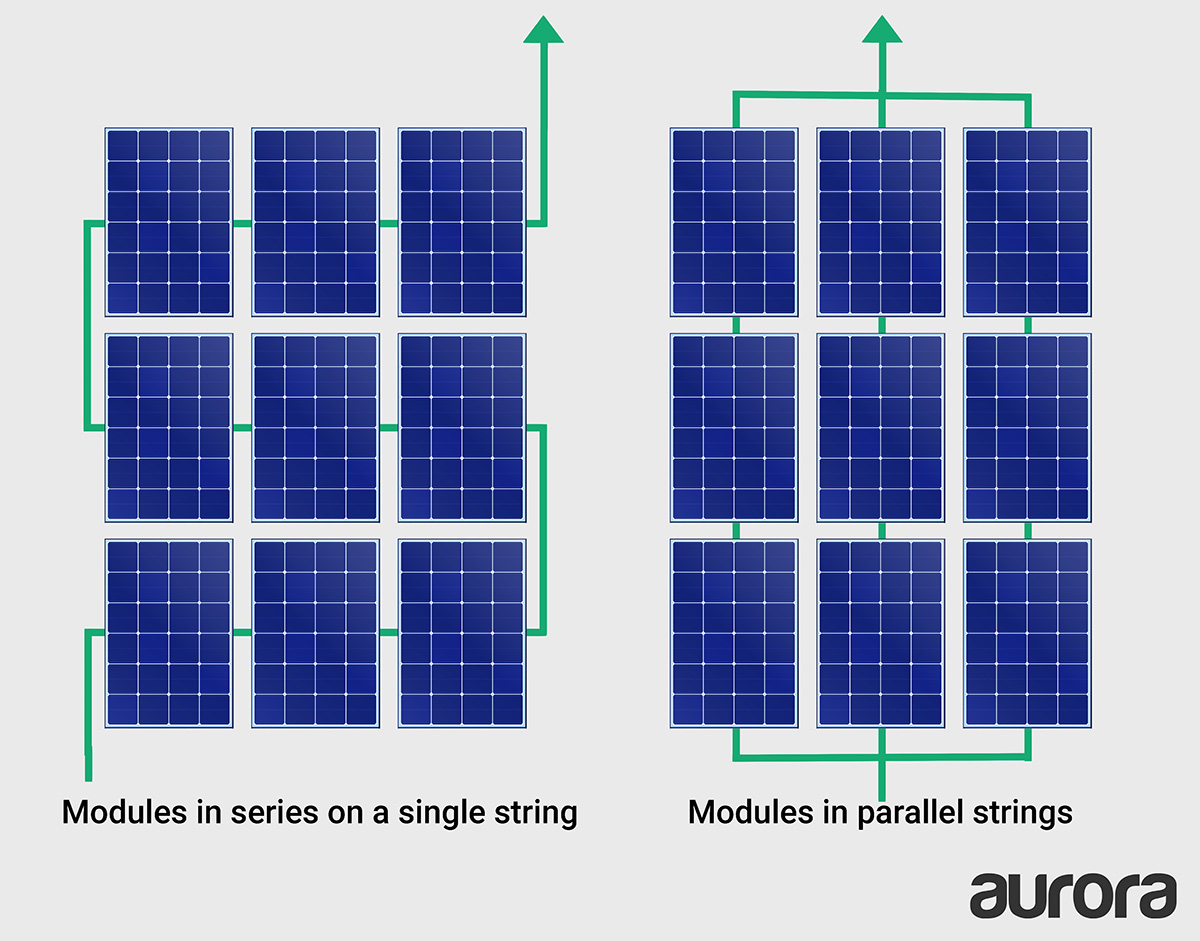
Calculating solar string configuration correctly is one of the most critical steps in PV system design. Get it wrong and your system won’t meet permit requirements — or worse, your inverter could be damaged. Here’s the complete guide.
What Is a String Configuration?
A string is a series connection of solar panels. The number of panels in series (string length) determines the string voltage, while the number of strings in parallel determines the current. Your inverter’s input specifications define the acceptable ranges for both.
Key Parameters You Need
Before calculating string configuration, gather these values from your equipment spec sheets:
From the solar panel datasheet:
- Voc — Open Circuit Voltage (at STC)
- Vmp — Maximum Power Voltage (at STC)
- Isc — Short Circuit Current
- Imp — Maximum Power Current
- Temperature coefficient of Voc (typically negative, around -0.27% to -0.35%/°C)
From the inverter datasheet:
- Max input voltage — absolute maximum DC voltage the inverter can handle
- MPPT voltage range — the voltage range where the inverter operates efficiently
- Max input current per MPPT
- Max short circuit current per MPPT
Step 1 — Calculate Maximum String Voltage (Cold Temperature)
The maximum string voltage occurs at the coldest temperature your location will experience. Use the NEC 690.7 method:
Formula:
Voc (corrected) = Voc × [1 + (Temp coefficient × (Tmin − 25))]
Where Tmin is the lowest expected ambient temperature at your project location.
Example:
Panel Voc = 40V | Temp coefficient = -0.30%/°C | Tmin = -10°C
Voc corrected = 40 × [1 + (-0.003 × (-10 − 25))]
Voc corrected = 40 × [1 + (-0.003 × -35)]
Voc corrected = 40 × 1.105 = 44.2V per panel
Maximum panels in series:
Max string length = Inverter max input voltage ÷ Voc corrected
Example: 600V ÷ 44.2V = 13.5 → maximum 13 panels per string
Step 2 — Calculate Minimum String Voltage (Hot Temperature)
The minimum string voltage occurs at the hottest temperature — typically when panels reach 70–75°C cell temperature on a hot summer day.
Formula:
Vmp (corrected) = Vmp × [1 + (Temp coefficient × (Tmax − 25))]
The corrected Vmp must stay within the inverter’s MPPT voltage range at all times.
Example:
Panel Vmp = 33V | Temp coefficient = -0.30%/°C | Tmax = 70°C
Vmp corrected = 33 × [1 + (-0.003 × (70 − 25))]
Vmp corrected = 33 × [1 + (-0.135)] = 33 × 0.865 = 28.5V per panel
Minimum panels in series:
Min string length = Inverter MPPT minimum voltage ÷ Vmp corrected
Example: 200V ÷ 28.5V = 7.0 → minimum 7 panels per string
Step 3 — Verify Current Limits
Each string in parallel adds current. Verify:
- Total Isc (all strings) must not exceed inverter max short circuit current per MPPT
- Total Imp (all strings) must not exceed inverter max input current per MPPT
Step 4 — Document in Your Permit Plan Set
Your permit plan set must include a string configuration table showing:
- Number of modules per string
- Number of strings per MPPT input
- Corrected Voc at minimum temperature
- Corrected Vmp at maximum temperature
- Total array current
- Inverter input voltage and current ratings
Most AHJs and PE reviewers will check this table carefully — errors here are a common reason for permit rejection.
Let EnersolConnect Handle the Calculations
String configuration calculations are part of every plan set we produce. Our licensed engineers verify all voltage, current, and temperature calculations to ensure your permit is approved on the first submission.
PE-stamped plan sets starting from $600. Delivered in 2–5 business days.